
There is no normal
A story of not fitting in, blooming late, and integrating sexuality into your life

All stories in Sexual Empowerment in Midlife are anonymized and published with the explicit approval of their subjects, who are wholly separate from my coaching clients. For more on how this publication was created, check out my intro post.
Sex = Death
Amy’s story is about secrecy. This is the first time it is being told.
Amy hid her fears. She hid being queer. But mostly, she hid that she had never had sex.
A distinct memory from when she was eight years old colored Amy’s idea about sex for years to come. A proud member of Gen X, Amy was a latchkey kid who came home to an empty house after school and watched TV all afternoon. One day, at the height of the AIDS epidemic, she saw an ad whose message was stark and severe: AIDS equals death. And in her young mind, she expanded the narrative: AIDS is transmitted through sex, so sex equals death. She didn’t ask anyone about it, she never shared her conclusion—she just lived by it.
Through puberty, Amy feared that boys would have crushes on her, because then they would want sex and she would have to fend them off. At a social event with the boys’ camp one summer, she was horrified at the attention garnered by her slim waist and already ample breasts—she needed to hide it.
And she wasn’t wrong. When she was 15, at a coed slumber party, the boy lying next to her managed to stick his fingers inside her vagina before she could squirm away. A few months later, involuntarily sitting on someone’s lap in a crowded car, she again suffered when he weaseled his fingers inside her.
Her conclusion: sex is not something you seek, it is something that happens to you. And although she was raised in an open-minded Jewish family, she adopted a purity Christian stance: it was best to wait until marriage.
Not fitting in the box
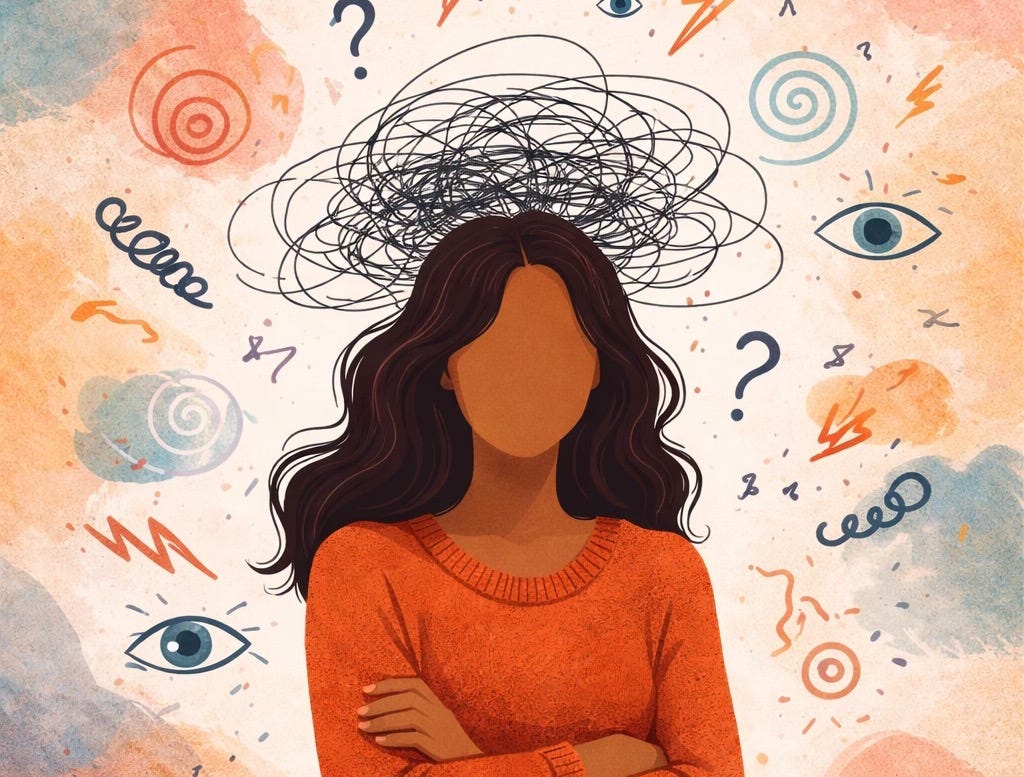
This ran counter to the vibe at her all-girls’ high school. The popular girls talked openly about having sex with boys, and Amy felt awkward that she couldn’t contribute. Because she didn’t want sex and wasn’t interested in dating, she believed she must not be normal.
But rather than ostracize her, the cool girls took her under their wing. Amy was short and slight, and they babified her. It wasn’t meaningful friendship and it did nothing for her development, but it sheltered her from harm.
When a new girl arrived sophomore year, Amy made her only close friend. Jenny was supportive and fun, and was the first person her own age that Amy actually related to. Soon, Amy realized she might have feelings for Jenny. She never expressed them—she didn’t know how—but she began wondering if she was gay.
In college, Amy again found herself on the outside. By then, most people had had sex, and the fact that she hadn’t, that she didn’t want to, was becoming an obsession. A close friendship with a closeted gay boy served them both, making it look to their peers like they had the type of intimate relationship that in fact neither one of them was ready for.
Then, while studying abroad, Amy found herself making out with a guy at a club. It didn’t arouse her much, but at least it was a step in the right direction—her only step during college.
After graduation, one evening over drinks, Amy’s friends started trading stories of their sexual encounters. With nothing to tell, Amy felt a rush of shame. So she concocted a story based on her one experience, expanding the club story to include intercourse. She also adjusted her age at the time from 20 to 19, believing that it was more acceptable to lose your virginity as a teenager. All in the name of being “normal.”
27-year-old virgin
The years dragged on. Then, when she was 27, Amy reconnected with Jason, a man she had met at a workshop years earlier. Jason pursued her, which (counter to her younger days) excited her. It relaxed her to see him express his feelings for her with ease, something she had never been able to do.
They attempted sex several times, but neither of them was able to climax. Amy’s years of fear and insecurity had left her vagina tight and unrelenting, and Jason was very large besides. Yet the connection between them was what she had always imagined for her “first time.” “I like the idea that I lost my virginity to him, so that’s what I’m going to say,” was how she put it to me.
And then Amy looked me in the eyes: “I lost my virginity at 27. That’s the first time I’ve said that out loud.”
Disconnecting the emotional from the physical
Amy dated after that—and had sex—but relationships lasted only a few months, interspersed with long periods of celibacy. In her 30s her friends all had committed partnerships, and that gave her a new reason to believe she wasn’t normal. When she did date, she shared little information with her friends, leaving her with no sounding board and no frame of reference.
Amy felt that her emotions were divorced from her sexuality. She sought men to fulfill her physical desires, while investing emotionally only in her female friends. She tried making out with women, but believes that the emotional connection blocked any physical arousal for her. She sought labels to make sense of how she felt: sapiosexual (only turned on by the intellectual), or asexual.
After a bad breakup while living in a small town where everyone knew your business, Amy decided it was safer not to date at all. When Covid left her alone and isolated, she tried masturbation. She bought a new vibrator, and for the first time in her life she figured out how to make it work for her. Discovering that you don’t need a partner to get off gave Amy a new relationship to her body:
It was her body. She could find pleasure when she wanted to.
Bringing her full self to her life
Transformation is always possible, and we never know what life will bring.
After yet another bad breakup, Amy met Will. All at once, everything she believed about herself was proven untrue. She was passionate and sensual and turned on by his body and his mind together. She could combine the physical and the emotional, and it made her feel more alive.
Having both sex and love in the same person made Amy want to experiment, to push her sexual boundaries, and to discover her complete self. And she realized that she is normal, exactly the way that she is. Or perhaps that there is no normal, and it’s about authenticity: she feels more authentic when she deepens her intimacy.
Once she saw who she really was, Amy brought that entire person to her friendships, her family, and other relationships. Her sexuality has been a gateway to a new level of connection, and a deeper acceptance of herself.
Cheering for Amy!!